Advanced Oxygen Advantage Instructor Training – Scotland
Why Scotland
Scotland offers conditions that support real learning. Stepping away from daily routines and constant stimulation creates space to slow down and pay attention – not just to the material, but to how it lands in your body and nervous system.
This instructor training is delivered as an immersive retreat because learning how to teach functional breathing benefits from time, rhythm, and reflection. With fewer distractions and a smaller group, there’s room to observe patterns, ask better questions, and integrate understanding gradually rather than rushing from one technique to the next.
The natural environment plays a quiet but important role. Time outdoors, simple movement, and moments of stillness help regulate the system and support clearer learning.
Alongside the formal training, there are opportunities for optional, extra-curricular experiences such as qigong, walks in nature, and hot and cold exposure using an outdoor, wood-smoked sauna and loch dip. These are not part of the certification process, but they offer additional ways to recover, reflect, and settle between sessions.
Scotland isn’t just a backdrop for the training. It’s part of what allows the work to unfold at a pace that supports understanding, confidence, and real integration.
This retreat suits coaches, health and movement professionals, and anyone who wants to develop the skills to teach functional breathing with confidence.
Some participants arrive with years of experience, others are newer to this work. What matters most is curiosity, openness, and a willingness to engage with the learning process.

How it feels to be here
The days unfold with structure, but not rigidity. Teaching sessions are balanced with time to explore practices, reflect on questions, and revisit ideas as they settle. There’s space to learn through discussion, observation, and experience, rather than feeling the need to keep up or perform.
Mornings often begin more quietly, supporting awareness and regulation before moving into focused learning. As the day progresses, periods of teaching and practical work are interspersed with breaks that allow the nervous system to settle and integrate. Learning continues not just in formal sessions, but in conversation, walking outdoors, or moments of stillness.
Outside of scheduled teaching time, participants can choose how they rest and reset. Some take part in gentle movement, qigong, or walks in the surrounding landscape. Others spend time in the outdoor, wood-smoked sauna or experience cold exposure with a loch dip. These experiences are optional and informal – offered as ways to support recovery and integration, not as part of the formal training.
By the end of the retreat, many people notice that learning has landed more deeply than expected. Not because more content was covered, but because there was time for understanding to develop – and for confidence to grow naturally.


What you’ll explore
Foundations
You begin by exploring the foundations of functional breathing. This includes observing everyday breathing patterns, understanding how breath responds to physical and psychological demands, and recognising common habits that affect efficiency, comfort, and regulation. With more time available than in a workshop setting, there’s space to revisit these fundamentals, ask questions, and notice subtle shifts as understanding develops. The focus is on building a solid base that supports both personal practice and future teaching.
Awareness
Awareness sits at the centre of effective instruction. During the retreat, you spend time developing the ability to notice how breathing patterns relate to nervous system state, posture, and attention. You explore when intervention is helpful and when observation is more appropriate, learning to work with the breath as feedback rather than something to fix. This section supports clarity, sensitivity, and better decision-making as a coach or instructor.
Application
Application brings the learning into real-world teaching. Through guided practice, discussion, and shared reflection, you explore how to apply Oxygen Advantage principles with different people and in different contexts. The retreat setting allows time to practise teaching, explore case scenarios, and build confidence without pressure. By the end of the retreat, application feels less about following protocols and more about responding appropriately to the person in front of you.
How we teach in a retreat setting
Teaching functional breathing well is a coaching skill, not a performance. In a retreat setting, we’re able to focus on how learning is guided, adapted, and applied – rather than simply delivering content.
Concepts are introduced clearly, then explored through practice, observation, and discussion. Questions are worked with as they arise, allowing learning to stay relevant to the individual rather than fixed to a script.
This approach helps participants understand not just what to teach, but how to make appropriate decisions in real situations.
A strong emphasis is placed on developing teaching confidence. You learn how to recognise variation between people, adjust language and pacing, and respond to different physical and psychological states.
For example, you’ll learn to recognise whether someone’s shallow, rapid breathing is driven by postural tension, anxiety, or simply habit – and how to adjust your coaching approach for each. You’ll practice guiding the same exercise with different clients, adapting your language, pacing, and intervention based on what you observe. This kind of practical fluency develops naturally when there’s time to practice, reflect, and try again.
Time is given to practise explaining concepts, guiding exercises, and working through common coaching scenarios in a supportive environment.
Supportive movement and awareness practices are used to make breathing patterns more visible and to support learning, not to add complexity. These practices help clarify posture, tension, and regulation, giving you additional reference points when working with others.
The aim is to develop instructors who can think clearly, adapt responsibly, and teach with confidence — guided by understanding rather than reliance on rigid techniques.


What’s included
The in-person retreat
Accommodation & meals
Optional extra-curricular experiences
(Optional and not part of formal training or assessment)
Pre & post-retreat integration
Ongoing learning & certification
Personal support
Certification Pathway
A clear, supportive process
Attend the retreat
Complete the online modules
Build your case studies
Submit your assessment
Achieve certification
Why train with us
Learn in-person from two experienced master coaches
You’re guided by two OA Master Coaches, Gray Caws and Andrew Ritchie – both with years of experience across:
You see different coaching styles. You hear different perspectives. You learn to adapt – not copy.
You get practical, human, hands-on coaching support
Functional breathing is simple. Teaching it requires skill. We help you:
You learn how breath, posture, and movement work together
Breathing doesn’t exist separately from the rest of your body. We show you how it interacts with:
This is where movement and awareness practices add depth to OA.
You also learn directly from Patrick McKeown
You’re not choosing between us and and world-renowned breath expert Patrick McKeown. You also learn directly from him through:
You don’t just understand the method – you know how to teach it
The difference is simple: This training develops practical instructors – not just people who know the theory.
Your Coaches
This training is led by experienced coaches who work collaboratively rather than hierarchically. You’re guided by practitioners who teach breathing in context – shaped by years of coaching, movement practice, and real-world application – and supported by the wider Oxygen Advantage faculty.

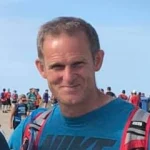
Gray Caws
Master InstructorGray’s work centres on the belief that sustainable health and performance emerge when breath, attention, and movement are aligned with everyday life.
His teaching style brings clarity to complex ideas, helping people understand not just what to do, but why it matters and when to apply it.
He is a Master Instructor in both the Oxygen Advantage® and Buteyko methods, with a background as a specialist personal trainer and running coach.
His approach has been shaped by extensive training with internationally recognised teachers across breathwork, meditation, qigong, and movement, alongside many years of hands-on coaching with a wide range of clients.
Gray has delivered breathwork programmes for initiatives such as ASICS Movement for Mind, working alongside mental health researcher Dr Brendon Stubbs. That programme followed nearly 200 participants and demonstrated meaningful improvements in activity levels and wellbeing, reinforcing his emphasis on understanding over pressure.
He is a member of the EMCC UK, a professional body committed to maintaining and developing high standards in coaching and mentoring practice.
As founder and director of Adventures in Movement, Gray focuses on teaching that is grounded, adaptable, and human – supporting people to carry learning confidently into daily life.

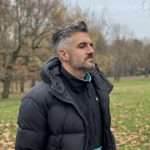
Andrew Ritchie
Master InstructorAndrew brings a steady, practical presence to teaching, shaped by over 20 years working in outdoor health, movement, and resilience.
His work focuses on how breathing supports regulation, adaptability, and performance under real-world demands.
A Master Oxygen Advantage Instructor, Andrew has a particular interest in Heart Rate Variability and its role in stress, recovery, and decision-making. His teaching integrates functional breathing with movement and awareness practices, including qigong, to support both physical and mental resilience.
Through his work with Performance Breathworks, Andrew has supported thousands of people – from children to adults, beginners to experienced athletes – across corporate settings, sport, education, and individual coaching.
He also designs and leads retreats and adventure-based programmes that encourage learning through experience rather than instruction alone.
Andrew’s approach is inclusive and supportive, offering structure without rigidity and space without uncertainty. He helps participants develop confidence through clarity, thoughtful pacing, and practical application.

Patrick McKeown
Founder, Oxygen AdvantageThis training is delivered in collaboration with Patrick McKeown, the founder of the Oxygen Advantage method.
Patrick provides the foundational framework for the training and teaches a series of live online sessions as part of the certification pathway. These sessions connect reminders of core principles, deeper theoretical insight, and long-term perspective on the method’s development and application.
While the in-person retreat is led by experienced Master Instructors, Patrick’s ongoing involvement ensures the training remains aligned with the integrity, evolution, and original intent of the Oxygen Advantage approach – while allowing space for thoughtful coaching, discussion, and real-world application..